


Read more
Blog
Pensions and Europe’s Savings and Investments Union
The Savings and Investments Union (SIU) has many important elements: deeper capital markets, more cross-border investment, stronger supervision and better financing of European firms. However, politically its most important dimension is probably pensions. In...
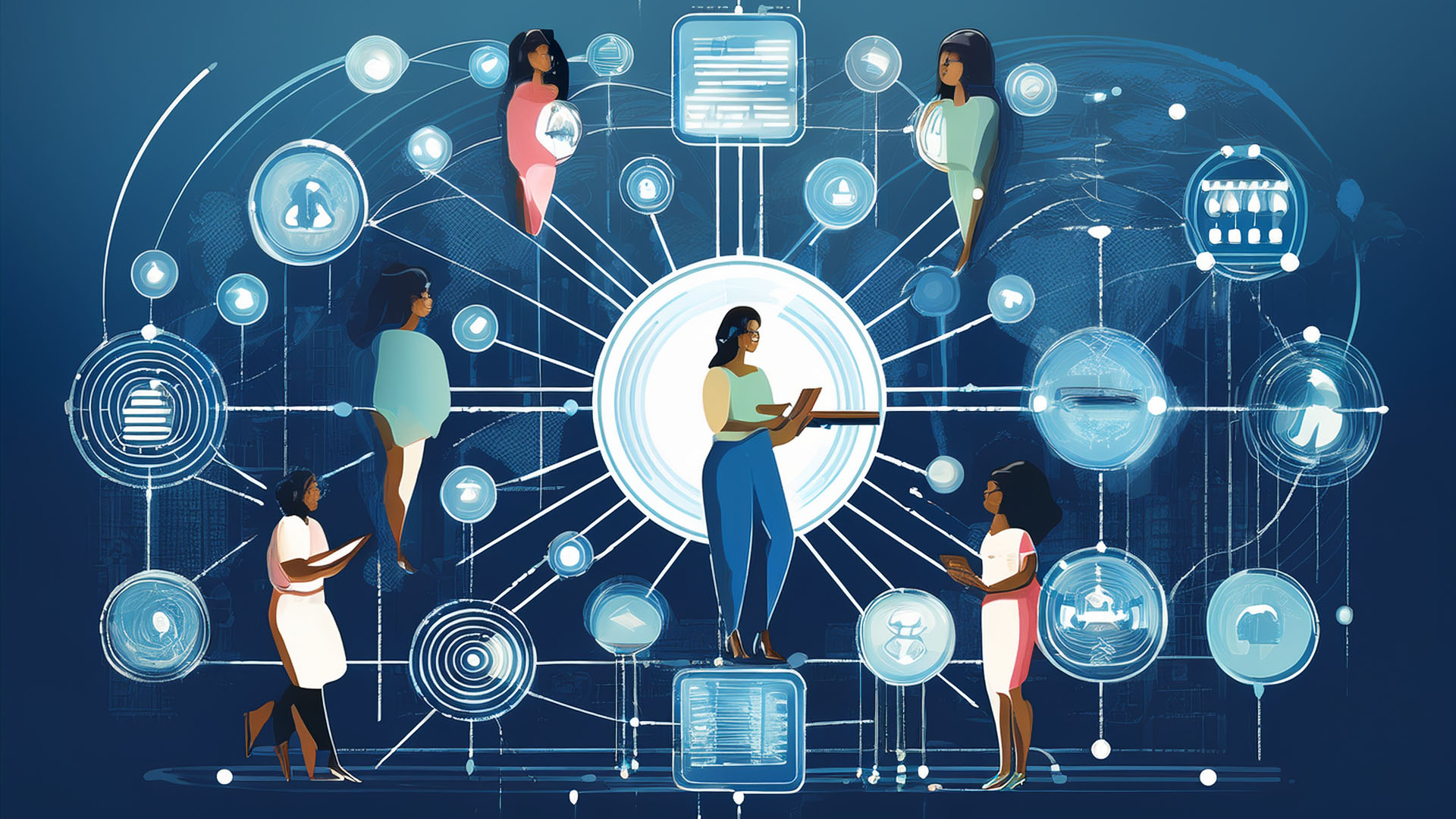
Access to affordable credit remains a systemic bottleneck for women’s economic empowerment in developing economies. While specialised financial intermediaries have long targeted women to bridge the gap left by traditional banking, these organisations constantly navigate a delicate dual mandate: achieving financial sustainability while maximising social impact. As the financial sector deepens, the wholesale debt market has emerged as a vital channel to address these capital constraints. By supplying retail providers with institutional liquidity, these markets play an increasingly central role in shaping local financial ecosystems. However, the dynamics of how wholesale funding influences women’s access to retail credit remain remarkably complex.
A review of the existing academic literature shows that the capital structure of financial service providers directly dictates their operational risk and outreach capacity. Subsidised capital often enables institutions to expand into underserved, poorer populations and to maintain a strong focus on female borrowers, although it frequently comes at a cost of operational self-sufficiency. Conversely, integration with commercial funding sources promotes scalability and financial resilience but introduces a significant risk of mission drift. When subjected to commercial pressures, lenders may prioritise profitability over social goals, shifting their focus toward wealthier clients and larger loan balances. To mitigate this, centralised apex facilities and wholesale debt markets attempt to pool resources and lower transaction costs, yet evidence shows that their success is deeply contingent on local institutional quality and cultural norms.
When moving from literature to empirical data, we find stark heterogeneity and profound analytical challenges. An analysis of global standardised databases tracking financial service providers reveals significant geographical divides in lending models. For instance, while providers in certain South Asian markets exhibit near-universal targeting of female clients, models in parts of Sub-Saharan Africa often feature substantially larger loan balances with lower baseline female participation. More importantly, the data reveal a persistent gender disparity in capital allocation: even when women constitute the vast majority of an institution’s borrower base, they frequently receive a disproportionately small fraction of the total gross loan portfolio. This suggests that broader outreach metrics do not guarantee equal financial access.
Despite these insights, current global datasets suffer from severe systemic deficits. Critical variables detailing the specific terms of wholesale borrowing, the presence of risk-sharing mechanisms like guarantees, and nuanced indicators of genuine female financial empowerment are overwhelmingly missing. This lack of granular data restricts current analysis to broad descriptive correlations, thus severely limiting the ability to establish causal relationships between funding structures and social outcomes.
Consequently, there is an urgent need to transition from reliance on incomplete global databases to rigorous primary data collection. Future policy and academic research must leverage targeted fieldwork to gather comprehensive information on wholesale funding covenants, institutional risk management and precise social performance metrics. Only by generating robust, quasi-experimental evidence can the financial community effectively design scalable wholesale mechanisms that truly advance women’s economic empowerment and foster inclusive global markets.
This research was funded by the Bill & Melinda Gates Foundation through the Innovations for Poverty Action’s (IPA) Entrepreneurship and Private Sector Development program.