

Links
Next content
Read more
Understanding Cyber Risk: Drivers and Impacts on Firms
This paper examines the firm-level determinants and financial consequences of cyberattacks using a dataset that combines survey data from the Bank of Italy with firm balance sheet information from Orbis (2014-2022). We employ panel...
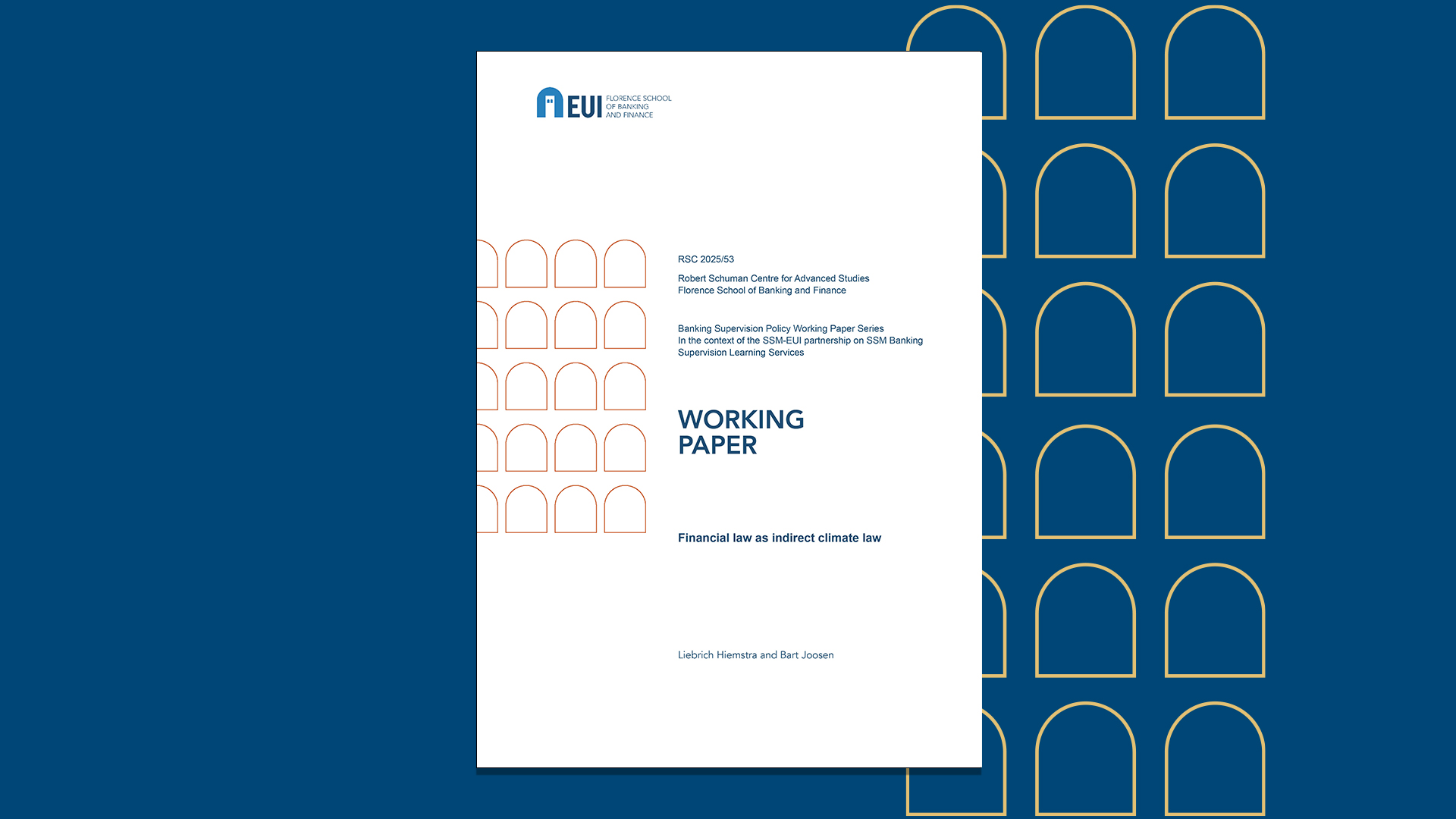
This paper explores the concept of ‘indirect climate law’, focusing on how financial law and sectorspecific regulation contribute to climate objectives in anticipation of direct climate legislation. Against the backdrop of the European Climate Agenda and the EU’s commitment to the Paris Agreement, the authors examine the rapid evolution of legislative measures targeting the financial sector over the past decade. The analysis highlights the pivotal role of financial institutions in facilitating the transition to a low-carbon economy, not through the reduction of direct emissions but by influencing scope 3 emissions and supporting sustainable investment practices. By mapping these developments, the paper provides insight into the mechanisms by which financial law acts as a catalyst for climate risk mitigation and the achievement of broader environmental goals.
—
This paper is part of the Banking Supervision Policy Working Paper Series in the context of the SSM-EUI partnership on SSM Banking Supervision Learning Services. Read more.