


The team
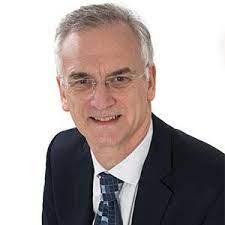
Paul Fisher
Part-time Professor - Florence School of Banking and Finance
Biography
Paul Fisher is a British economist, who served at the Bank of England for 26 years, including as a member of the Monetary Policy Committee. Since 2016 he has been chair of the London Bullion Market Association and a non-executive director at the UK Debt Management Office. Fisher is a visiting Professor at Warwick University Business School; Richmond, The American International University in London; and the London Institute of Banking and Finance where he was Chair of the Board of Trustees from 2011 to 2017. He is a Senior Research Fellow in the DAFM Research Centre at the Business School, King’s College London and a Fellow at the Cambridge Institute for Sustainability Leadership (CISL). As a CISL Fellow he was a member of the EU High-Level Experts Group on Sustainable Finance from January 2017 to January 2018; the UK Green Finance Task Force from September 2017 to March 2018; and also served as vice-chair of the CISL-supported Banking Environment Initiative until 2022. In 2025, he was awarded the Order of the British Empire (OBE) for his exceptional contributions to public finance as Chair of the Audit and Risk Committee at the UK Debt Management Office. Fisher holds a BSc in economics with statistics from the University of Bristol, an MA in economics from the University of Warwick and a PhD in macroeconomic modelling, also from the University of Warwick.
List of relevant publications:
- ‘Inflation targeting: considerations for central banks in Africa’, Bank of England, Quarterly Bulletin, September 29, 2025. This paper was written to support technical assistance work, for countries considering the introduction of a formal inflation targeting regime. With Glenn Hoggarth (2025). Link to paper.
- ‘De-industrialization and the Great Productivity Slowdown: What Comes Next?’, International Productivity Monitor, 48, Spring 2025, P115-138. Link to Paper.
- ‘The Green Mandate of the Bank of England‘, Chapter 2, Central Banking and Sustainability, edited by Alexander and Grunewald, pp 21-40. February 2026. Cambridge University Press. With Kern Alexander.
- ‘Sustainable Central Bank Balance Sheets and Operations‘, Chapter 7, Central Banking and Sustainability, edited by Alexander and Grunewald, pp129-153, February, 2026. Cambridge University Press. With Diarmuid Murphy.
- ‘Exports are not a domestic food security plan’. An article advocating a systemic approach to food security, from farm to consumer in Farm Policy Journal, Vol23, No 1, March, 2026, pp 772-83. Special issue on designing food-secure systems. With Turlough Guerin.
- ‘Trump vs the Fed; Why central bank independence matters’, essay in Warwick Business School Core Insights newsletter, 25 February 2026. WBS Core Insights. Slightly revised version of the article below, free access.
- ‘Why economies need the discipline of central bank independence‘,
in Financial World, the journal of the London Institute of Banking and Finance, February 2026. Behind a paywall: link here. - ‘Should the Bank of England have a dual mandate?’, essay in Warwick Business School Core Insights newsletter, 18 December 2025. WBS Core Insights.
- ‘Geopolitical ructions and the role of the dollar‘, article on Centralbanking.com. July 2025. With A. Large and G. Bingham from the Oliver Wyman Systemic Policy Partnership. Central banking.com subscription required. Also available without charge as ‘Geopolitical ructions: Implications for the international monetary system and central banks’ from the SPP website.
- ‘When the Model Isn’t Looking Good’, In Financial World, the journal of the London Institute of Banking and Finance, November 2024 – January 2025, pages 44-46.