

Read more
News
New partnership to strengthen financial literacy in Portugal
The European Commission’s Reform and Investment Task Force (SG REFORM), the Florence School of Banking and Finance (FBF) at the European University Institute (EUI), and the Portuguese National Council of Financial Supervisors (CNSF) —...
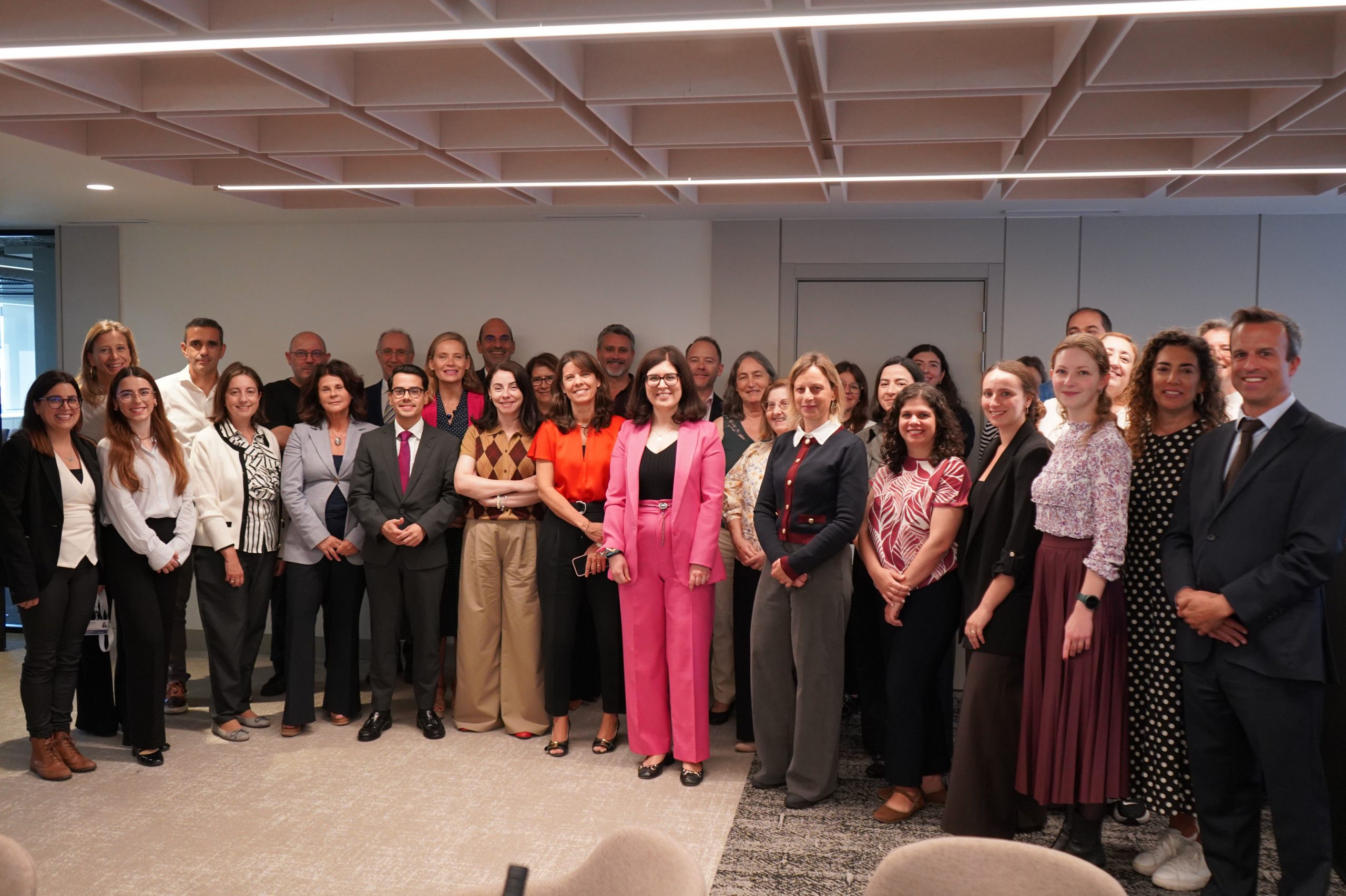
On 7 October 2026, the Florence School of Banking and Finance (FBF) brought together supervisors, policymakers, academics and international experts at the CMVM in Lisbon to discuss how to assess the impact of financial education initiatives under Portugal’s National Plan for Financial Education (PNFF).
The workshop was part of a project funded by the European Commission’s Technical Support Instrument. Through the project, FBF is supporting the Portuguese National Council of Financial Supervisors (CNSF) in developing an impact evaluation framework. The CNSF comprises Banco de Portugal, the CMVM and the Autoridade de Seguros e Fundos de Pensões (ASF).
Opening the workshop on behalf of the CNSF, Inês Drumond outlined the rationale for the work. Since 2011, the PNFF has involved numerous initiatives and partners, but participation figures and satisfaction measures alone cannot determine whether programmes lead to changes in financial knowledge, attitudes and behaviour. She asked participants to assess whether the proposed evaluation methods were technically robust, feasible, proportionate and suitable for informing decisions.
Cristina Pacella of the European Commission highlighted the growing need to move beyond financial literacy strategies and gather evidence about their effectiveness, including what works and what does not.
In a recorded contribution, Verónica Frisancho of the Inter-American Development Bank described rigorous evaluation as an essential foundation for effective public policy. She emphasised the importance of embedding evaluation from the design stage, measuring behaviour as well as knowledge, and making greater use of administrative data.
Lessons from other evaluation experiences
The afternoon sessions offered perspectives from Portugal and other countries.
María Gutiérrez de Ojesto and Gabriela Ibáñez of Banco de España presented the work of the bank’s Independent Evaluation Office in reviewing its financial education activities. They emphasised the need to move beyond reporting outputs and demonstrate outcomes, noting that strategy sets the direction while governance enables its implementation.
Miguel Ferreira of Nova SBE presented Finanças para Todos, a randomised trial involving more than 10,000 adults in Portugal. The study found lasting improvements in financial knowledge, comparable results from online and in-person delivery, and evidence from Banco de Portugal’s credit register of reduced reliance on expensive forms of credit.
Theresa Lorenz of the OECD previewed the OECD/INFE guide to evaluating financial education programmes. She stressed that evaluation design should be guided by the decisions the evidence is intended to inform, rather than by methodological preferences alone, and highlighted the value of combining quantitative and qualitative approaches.
Implementation is already under way: the Teacher Training Programme pilot begins in October, while further capacity-building activities with PNFF partners will support the transition from evaluation design to practice.
The event provided a fruitful opportunity for beneficiary authorities and stakeholders to discuss the development of methods for evaluating financial education activities.