
Bank Board Academy
Bridging the Divide: Boards and Management in a New Risk Landscape
Home - Bridging the Divide: Boards and Management in a New Risk Landscape
Dates
09/10/2026 - 10/10/2026
Location
Residential
Download the programme
Registration deadline
25/09/2026
Approach
Qualitative
Delivery mode
Residential
Bridging the Divide: Boards and Management in a New Risk Landscape marks the sixth edition of the Bank Board Academy (BBA) training programme. This edition will feature around 9 sessions led by an international faculty of regulators, supervisors, academics, and professionals from the banking and finance sector.
Designed to encourage active engagement, the course places a strong emphasis on interaction through a series of dynamic panel sessions, where BBA participants are invited to contribute their insights and experiences.
The Academy will explore a broad range of topics, including bank board performance, dynamics, structuring and effectiveness; geo-economic and political risks; risk data aggregation; banking consolidation; and the development of a strong risk culture.
The Bank Board Academy (BBA) supports the effective functioning of bank boards by facilitating exchange between supervisors, regulators, and bank board-level professionals. It equips participants and Non-Executive Directors (NEDs) with the knowledge and tools necessary to contribute meaningfully to their bank’s strategic direction. Ultimately, the BBA seeks to foster more consistent and effective governance practices across the European banking landscape.
To ensure your spot at the training course, please register in advance. The limited seats will be allocated on a first-come, first-served basis.
Core sessions – Governing at the edge of change
The sessions will address the most pressing issues facing bank boards today:
- Board structure, roles and effectiveness. Strengthening board architecture, clarifying accountability, and enhancing real impact in decision-making.
- Artificial intelligence: risks and strategic opportunities. Moving beyond compliance to understand how AI reshapes risk, competitiveness, and long-term value creation.
- Supervisory priorities. Anticipating regulatory expectations and engaging constructively and confidently with supervisors.
- Geopolitical risk. Navigating fragmentation, macroeconomic uncertainty, and systemic shocks in a volatile global landscape.
- Supervisory simplification. Understanding the evolving regulatory agenda and its strategic implications for large institutions.
Special executive conversations – Inside the board–management dynamic
Two exclusive sessions will be dedicated to one of the most critical determinants of institutional success: the relationship between the Board and Executive Management. These will take the form of in-depth, candid conversations with a CEO and a Chair, offering rare insights into:
- Building trust while preserving constructive tension
- Aligning strategy and oversight
- Managing crisis and transformation
- Creating a high-performance governance culture
These discussions are designed to go beyond theory by providing authentic perspectives from leaders operating at the highest level of banking.
Who should apply?
Participants profile:
- Banks’ Non-Executive Directors (current and prospective)
- Banks’ Executive Directors
- Board secretaries and secretariat officers
- Members of board committees
- Regulatory and government affairs managers
- Board Advisory consultants
The BBA programme puts a high priority on participant diversity, also in geographic terms. Our intention is for participants to interact and discuss with peers to get a valuable learning, sharing and networking experience thanks to an outstanding international faculty of regulators, supervisors, and academics together with bank and finance professionals.
Course Faculty
-
Lea Deleris
Head of the Artificial Intelligence Robots and Tech (AIR Tech) team
BNP Paribas
-

Giovanna Gallì
Member of Spencer Stuart’s global board of directors
Spencer Stuart
-
Luca Giaccherini
Coordinator of the Joint Supervisory Team
European Central Bank
-
Alessandro Profumo
Former CEO of Leonardo and Unicredit, former Chairman of MPS
-

Emiliano Tornese
Part-time Professor - Florence School of Banking and Finance
European Commission

Friday 9th October 2026
09:00 – 09:15 Introduction & tour de table
09:15 – 10.30 Session 1: Fit and Proper 2.0: From Box Ticking to Cognitive Capability
This session will explore why board suitability assessments should go beyond CVs to consider judgment, independence, and cognitive diversity. It will also examine common boardroom blind spots such as groupthink, authority bias, and overconfidence, with particular attention to chairs and committee chairs given their outsized influence on governance and decision-making.
Facilitators: Giovanna Gallì and Mina Ames (Spencer Stuart)
10:30 – 11:00 Coffee break
11:00 – 12:15 Session 2: The Board–Management Contract Revisited
This session will revisit the evolving relationship between boards and management, focusing on how power, trust, challenge, and accountability are balanced in practice. It will explore when boards should step in, when they should step back, and how poor dynamics or shadow management can weaken decision-making and performance.
Facilitators: Giovanna Gallì and Mina Ames (Spencer Stuart)
12:15 – 13:15 Session 3: In Conversation with the CEO: Sergio Ermotti (UBS)
This session will consist of a conversation on the interaction between management and boards from the perspective of a CEO. It will touch on some issues such as the balance between trust and challenge and on the competences needed in the board to navigate the complexities of geopolitical dynamics and technological advancement.
Facilitator: Alessandro Profumo (former Chair and CEO)
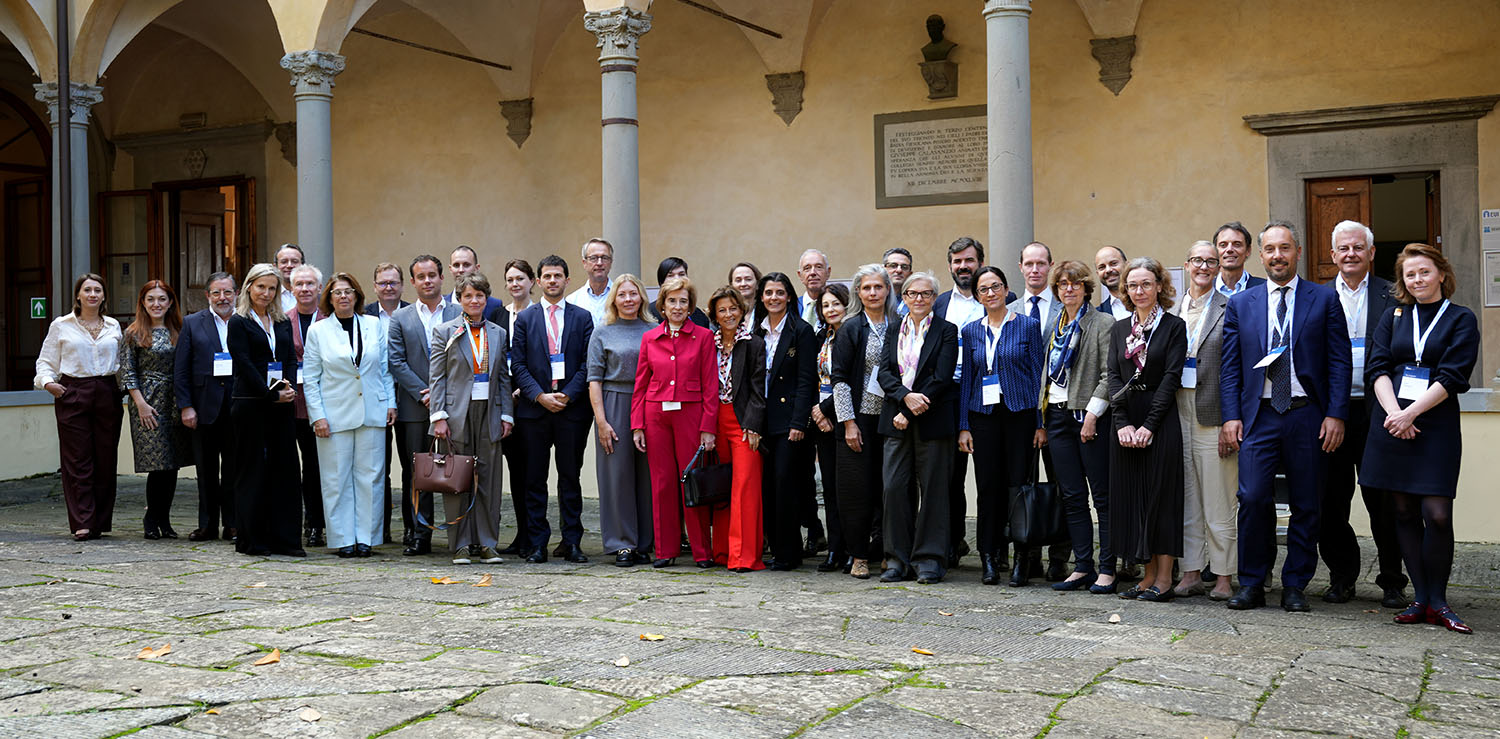
13:15 – 14:15 Group picture and lunch
14:15 – 15:30 Session 4: Board of Directors from a market perspective: Opening the Kimono!
How important is governance to value creation, and how risky is the one-man show? This session will look beneath the surface at how personal interests and power dynamics can override a company’s best interests. Drawing on past evidence, it will show how distorted governance may threaten market efficiency and how little the market can do about it.
Facilitator: Andrea Filtri (Mediobanca)
15:30 – 16:00 Coffee break
16:00 – 17:30 Session 5: Artificial Intelligence: Bank and supervisory perspectives
AI in Banking: Governance Challenges for Boards
Artificial Intelligence has moved beyond a technical topic to become a strategic, organizational and geopolitical issue for financial institutions. This session examines how AI is reshaping banking governance and risk management, both from the point of view of the industry and of the supervisors. The session will explore emerging questions around AI-driven operating models, including the automation of first line of defence controls, the evolving role of the second line, and the balance between control, growth and competitiveness. Particular attention is given to the interaction between banking regulation and horizontal European AI frameworks, and to the implications for board oversight and accountability.
Facilitators: Lea Deleris (BNP Paribas), Birgit Punison (European Central Bank) and Federico Pierobon (ECB)
17.30 – 18.15 Session 6: Supervisory priorities
The session will illustrate the ECB supervisory priorities, and it will provide an opportunity to exchange views over them.
Facilitators: Luca Giaccherini, Federico Pierobon and Birgit Punison (ECB)
18.15 – 19.30 Tour of Villa Salviati
19.30 – 21:00 Aperitif and dinner
Saturday 10th October 2026
8:45 – 10:00 Session 7: Geopolitical Risk: Can stress tests help boards address it?
Escalating geopolitical tensions pose material risks to banks’ financial performance, operational resilience, and strategic positioning. This session will explore stress testing as a tool for boards to understand, challenge, and oversee the management of geopolitical risk. The session will also discuss the ECB’s 2026 reverse stress test on how such risks could affect banks’ business models.
Facilitator: Luca Giaccherini and Federico Pierobon (ECB)
10:00 – 10:30 Coffee break
10:30 – 12:00 Session 8: In Conversation with the Chair: William Connelly (Société Générale)
This session will consist of a conversation on the interaction between management and boards from the perspective of a chairman. It will touch on some issues such as the balance between trust and challenge and on the competences needed in the board to navigate the complexities of geopolitical dynamics and technological advancement.
Facilitator: Alessandro Profumo (former Chair and CEO)
12:00 – 13:30 Session 9: Regulatory and supervisory simplification: A cross-country comparison
This session will offer a forward‑looking dialogue on how to make supervision and regulation more streamlined, proportionate, and effective. The discussion will explore practical simplification measures and will also touch on evolving regulatory debates around capital requirements and their implications for banks and oversight bodies. The panel will also compare EU and US regulatory and supervisory approaches, highlighting similarities and major differences.
Facilitator: Corso Bavagnoli (Lazard), Luca Giaccherini and Federico Pierobon (ECB)
13:30 Closing buffet lunch
FEES*:
- € 2550 – New participants
- € 2250 – Returning participants from previous editions
*Please note that payment must be settled within 48 hours of registration into the course. .
The fee includes tuition, access to all course materials and pedagogic activities, coffee and lunch breaks and social activities, as well as a certificate of attendance after the course has been completed. The fee does not include travel and accommodation expenses or other local transportation costs (taxis, private cars).
GROUP DISCOUNT (-10%) for minimum 2 participants from the same institution:
A group discount is available for institutions registering two or more participants. To qualify, the names of all participants must be submitted together in a single email to FBF. Please note that this offer cannot be applied retroactively to individual registrations completed at different times. Those wishing to take advantage of the group discount must write an email to fbf@eui.eu, stating the full names of the proposed participants.
CANCELLATION POLICY
In case you can no longer attend the course, you are required to inform the organisers by sending an email to fbf@eui.eu in order to free a seat for participants on the waiting list.
In case of frequent cancellations, FBF reserves the right not to accept further registrations from the same person.
Cancellation before 15 July: 100 percent refund.
Cancellation from 16 July until 15 September: 50 percent refund.
Cancellation after 15 September: No refund possible.
For more details, please contact fbf@eui.eu
You can find all relevant information about the course venue at this link, including logistical details, the venue address, and a range of accommodation options to suit different needs.
For any questions, please contact us at fbf@eui.eu and/or Victoria.Signorini@eui.eu.